

Hormones play an important role in almost every major function in a woman’s body. They influence the menstrual cycle, metabolism, mood, sleep, fertility, energy levels, and even bone health. When hormone levels become too high or too low, the body may begin to show noticeable changes.
But what causes hormone imbalance in women, and how can you recognize when your symptoms may be related to hormones? Understanding the possible causes of women’s hormonal health imbalance and the first step toward finding the right approach.
What Is Hormonal Imbalance in Women?
Hormonal imbalance occurs when the body produces too much or too little of certain hormones. Common hormones involved include estrogen, progesterone, testosterone, thyroid hormones, insulin, and cortisol.
Hormone levels naturally change throughout life. Puberty, pregnancy, postpartum changes, perimenopause, and menopause can all affect hormone levels. However, ongoing symptoms may indicate that something else is contributing to the imbalance.
What Causes Hormones Imbalance in Women?
Usually there is not one single cause of hormonal imbalance. Several lifestyle, medical, and genetic factors can influence hormone production and regulation.
1. Menstrual Cycle Changes
Hormone levels naturally fluctuate throughout the menstrual cycle. Estrogen and progesterone rise and fall at different stages, which can affect mood, energy, appetite, and other symptoms.
Significant changes in the menstrual cycle, such as very irregular periods or unusually heavy bleeding, may warrant further evaluation.
2. Perimenopause and Menopause
As women approach menopause, the ovaries gradually produce less estrogen and progesterone. This transition, known as perimenopause, can begin several years before menopause.
Some women experience hot flashes, night sweats, sleep problems, mood changes, irregular periods, or vaginal dryness during this stage.
3. Pregnancy and Postpartum Changes
Pregnancy causes major hormonal changes throughout the body. After childbirth, estrogen and progesterone levels can change rapidly. These shifts may contribute to changes in mood, energy, sleep, and menstrual patterns.
4. Thyroid Problems
The thyroid gland produces hormones that help regulate metabolism and many other bodily functions. Both an underactive thyroid and an overactive thyroid can affect energy, weight, mood, and other aspects of health.
5. Chronic Stress
Long-term stress can affect the body’s hormone regulation, particularly the systems involved in cortisol production. Persistent stress may also interfere with sleep, appetite, energy, and menstrual health.
Stress may not be the only cause of a hormonal problem, but it can contribute to symptoms or make existing issues more noticeable.
6. Poor Sleep
Sleep and hormones are closely connected. Consistently getting too little sleep may affect stress hormones, appetite regulation, metabolism, and overall well-being.
Improving sleep quality can therefore be an important part of supporting healthy hormone function.
7. Nutrition and Weight Changes
The body needs adequate nutrients to support normal hormone production. Highly restrictive diets, significant weight changes, or inadequate nutrition may affect menstrual and reproductive health.
Both very low and very high body weight can sometimes influence hormone levels and menstrual regularity.
8. Certain Medical Conditions and Medications
Conditions such as polyendocrine metabolic ovarian syndrome (PMOS), insulin resistance, thyroid disorders, and problems involving the adrenal or pituitary glands can affect hormone levels.
Some medications can also influence hormonal function. This is why identifying the underlying cause is often more useful than simply focusing on one symptom.
Common Symptoms of Hormonal Imbalance
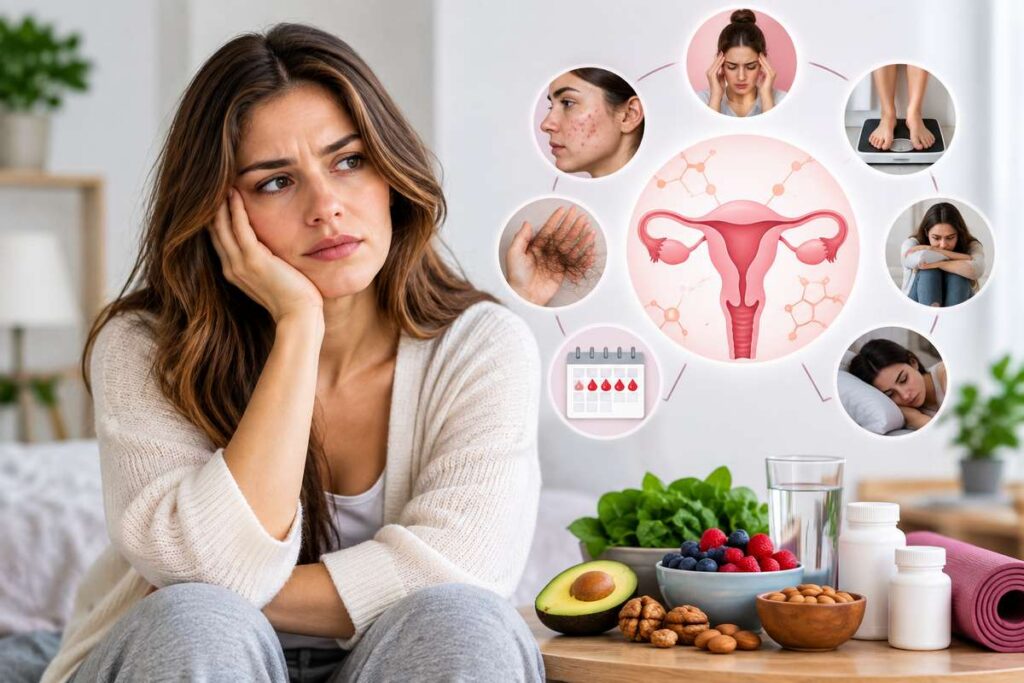
Hormonal changes can look different from one woman to another. Possible symptoms include:
- Irregular or missed periods
- Heavy or painful periods
- Hot flashes or night sweats
- Mood changes or irritability
- Unexplained weight changes
- Fatigue or low energy
- Difficulty sleeping
- Acne or changes in the skin
- Hair thinning or increased hair growth
- Reduced sex drive
- Vaginal dryness
- Difficulty with fertility
Having one or more of these symptoms does not automatically mean you have a hormonal imbalance. Similar symptoms can occur with many different health conditions.
How to Support Hormone Imbalance in Women
When searching for how to support hormone imbalance in women, it is important to understand that there is no single treatment that works for everyone.
The right approach depends on the hormones involved, the severity of symptoms, age, medical history, lifestyle, and the underlying cause.
Identify the Underlying Cause
The first step is understanding what may be driving the symptoms. A healthcare professional may review your symptoms, menstrual history, medications, lifestyle, and medical history. Depending on the situation, laboratory testing or other evaluation may also be appropriate.
Support Healthy Lifestyle Habits
Lifestyle changes can play an important role in overall hormonal health. Helpful habits may include:
- Eating a balanced, nutrient-rich diet
- Getting regular physical activity
- Maintaining a healthy weight
- Prioritizing consistent sleep
- Managing ongoing stress
- Limiting excessive alcohol intake
- Avoiding smoking
These habits may support overall health, but they should not replace appropriate medical evaluation when symptoms persist.
Medical Treatment
Treatment depends entirely on the cause. For some women, addressing an underlying thyroid condition, PMOS, or another medical issue may improve symptoms.
In other situations, a healthcare provider may discuss hormone-based treatments or other medications when appropriate. Hormone therapy is not suitable for everyone, so treatment decisions should be individualized and made with a qualified healthcare professional.
Understanding Your Hormonal Health
Hormonal health is highly individual. Two women can experience similar symptoms but have completely different underlying causes. That is why identifying the bigger picture can be more valuable than treating a single symptom.
At Archetype Health and Wellness, women can take a more personalized approach to understanding their health and hormonal concerns. Rather than assuming every symptom has the same explanation, the goal is to look at the individual factors that may be contributing to how you feel.
If you have been experiencing unexplained changes in your energy, mood, sleep, menstrual cycle, weight, or overall well-being, the next step may be understanding what is actually happening beneath those symptoms. Archetype Health and Wellness can help you in exploring a more complete hormone picture and guide you in determining which personalized care approach is best suited for you.